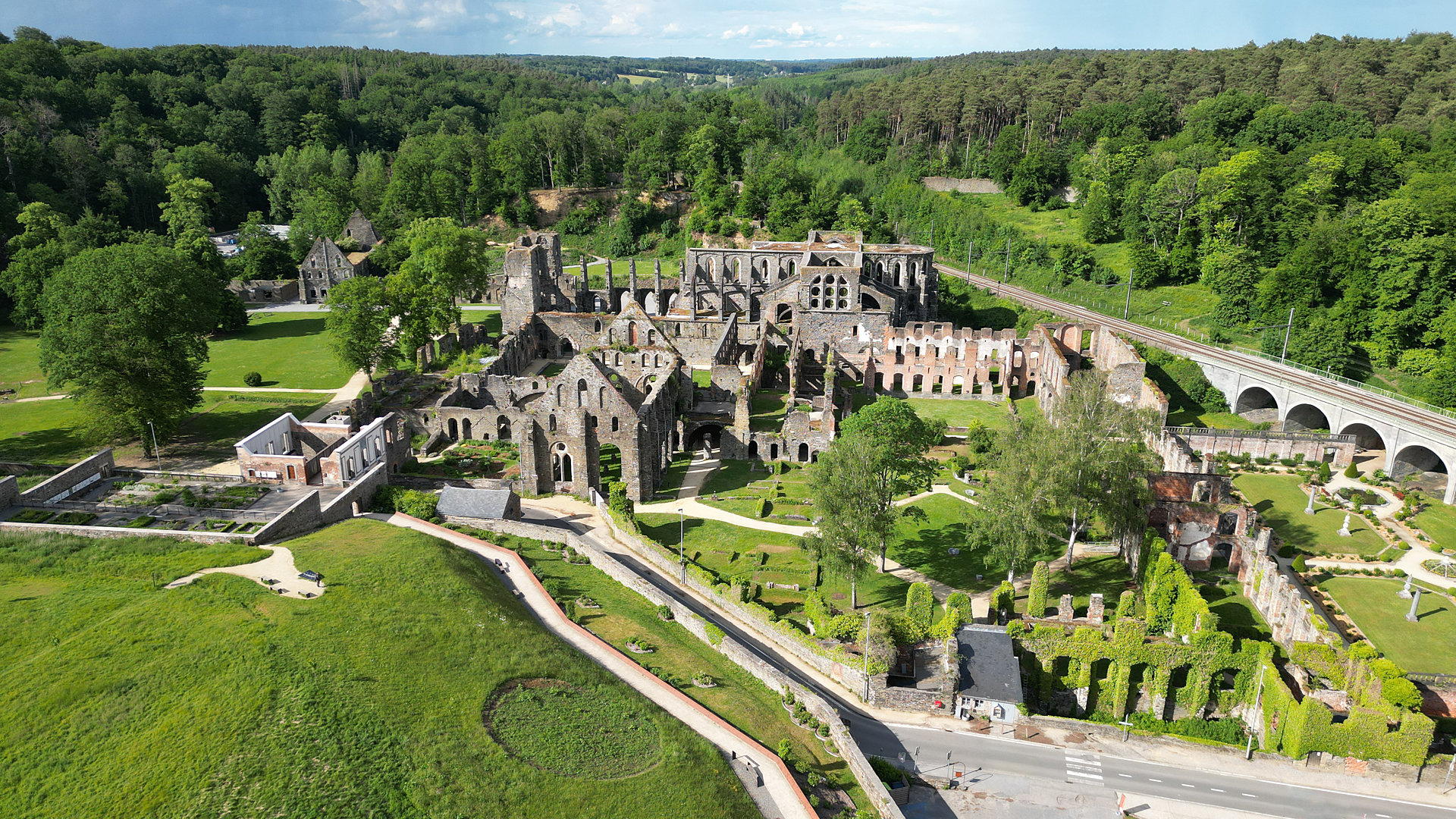

Organising a nature seminar is far more than a change of scenery. It is a strategic decision that transforms the quality of discussions, sparks creativity and builds lasting team cohesion. In Belgium, more and more companies, from SMEs to large organisations and management committees, are choosing to leave conventional meeting rooms behind and gather outdoors, away from screens and open-plan offices, for a genuine nature seminar in Walloon Brabant.
This complete guide walks you through it step by step: what a nature seminar is, the formats available, how to choose the right venue, team building ideas, logistics tips and the types of team it suits. Whether you are planning a professional corporate retreat, a team offsite, a strategic retreat or a team cohesion day in the heart of nature, you will find the answers to your questions here.
Research carried out by the American Psychological Association confirms that exposure to nature significantly reduces stress and improves cognitive abilities, two essential levers for high-performing teams. In Belgium, eco-responsible business tourism is backed by recognised certifications such as the Green Key label, a guarantee of serious environmental commitment.
In Walloon Brabant, Le Domaine des Trois Tilleuls offers a private, eco-responsible setting, 40 minutes from Brussels, to welcome your teams in an exceptional natural environment.

Le Domaine des Trois Tilleuls, a private setting in the heart of nature in Villers-la-Ville
What is a nature seminar? Definition and key issues
A nature seminar is any professional event, whether a working meeting, cohesion day, strategy workshop or training course, held in a natural setting, away from offices and conventional urban infrastructure. Forest, countryside, rural estate: the environment becomes a player in its own right throughout the day, not just a backdrop.
This type of seminar meets a growing need among companies: giving their teams room to breathe, reconnect and think deeply, in a professional world increasingly saturated with meetings and digital demands.
Conventional seminar vs nature seminar: what are the differences?
The conventional seminar in a conference hotel remains functional, but it does not create a shared memory. The nature seminar, by contrast, leaves a mark and fosters a lasting sense of belonging.
Why is this trend accelerating in 2026?
Several factors explain the rapid rise of the nature seminar in recent years in Belgium and across Europe.
First, the spread of remote working has profoundly changed teams’ needs. Colleagues see each other less often, so the moments spent together in person must be stronger and more meaningful. A nature seminar meets exactly that expectation.
Second, CSR and workplace wellbeing have become priorities for HR departments. According to a study published by Securex, employee wellbeing is now one of the main levers for retaining talent in Belgium. Organising a nature seminar sends a strong signal to your teams: their quality of life matters.
Finally, the growing weight of eco-responsibility in business decisions is pushing organisers towards certified venues and low-impact formats, such as estates awarded the Green Key label.
Why organise a seminar in the heart of nature: proven benefits
Getting out of the office is good. Getting out of the office and into the heart of nature is something else. Something special happens when a team puts down its laptops, breathes in the fresh air and walks together along a country path. Conversations change character. People look at each other differently. And something, gently, falls back into place.
It is not just an impression. Science confirms it, and the teams who have experienced it never quite go back to the conference hotel.
Team cohesion and nature: why wide open spaces strengthen bonds
Cohesion cannot be ordered. You cannot put it on a meeting agenda and hope it appears between two strategic items. It is built in real moments, when people meet in a different context, with no visible hierarchy and no screen between them.
Nature creates these moments almost effortlessly. A walk in the forest, a meal shared outdoors, a group activity far from the office, and suddenly the barriers come down. Colleagues become people. Managers become approachable. Teams leave with something more solid than what they arrived with.
This is particularly valuable for remote teams, who have few chances to meet in an informal, relaxed setting.
Wellbeing at work: why nature is HR’s best ally in 2026
There is a lot of talk about wellbeing at work. But between words and concrete action there is often a gap. Organising a nature seminar is a simple and powerful way to close it, by showing employees that their quality of life is a genuine priority, not just a box to tick.
The effects are immediate: stress eases, the mind clears, bodies relax. According to data from Securex, nearly one Belgian worker in five shows signs of chronic stress. A day in nature will not solve everything, but it sends a strong signal. And teams remember that for a long time.
Creativity and innovation in business: what if nature were your best tool?
The best ideas are rarely born in front of a screen. They emerge in the margins: during a walk, around a fire, in that moment of silence when the brain, finally free of notifications, starts to wander freely again.
Neuroscience research confirms it: the natural environment promotes what scientists call attention restoration. A study published in the journal PLOS ONE showed that immersion in nature significantly increased creative performance. For teams in charge of innovation or strategy, a nature seminar is therefore not a parenthesis but a genuine accelerator.
Internal communication: how does a day in nature improve working relationships?
In many companies, communication suffers from the same ailments: silos between teams, overly formal exchanges, unspoken issues that build up over the months. People talk, but they do not say much to each other.
A natural setting changes that. Walking side by side instead of facing each other across a meeting room, sharing a meal outdoors, taking part in an activity together: these moments create connections that internal communication tools will never replace. People leave with a better understanding of one another. And you can feel it in day-to-day work, long after the seminar.
Nature seminar formats: day, residential, offsite, retreat
There is no single type of nature seminar: there are as many as there are team needs. A cohesion day does not have the same goals as a leadership strategic retreat. A creative offsite is not built like a wellbeing corporate retreat. Before choosing a venue, you first need to choose the right format, the one that matches what your team is going through right now and what it needs.
Here are the five most common formats, with their specific features and the contexts in which they work best.
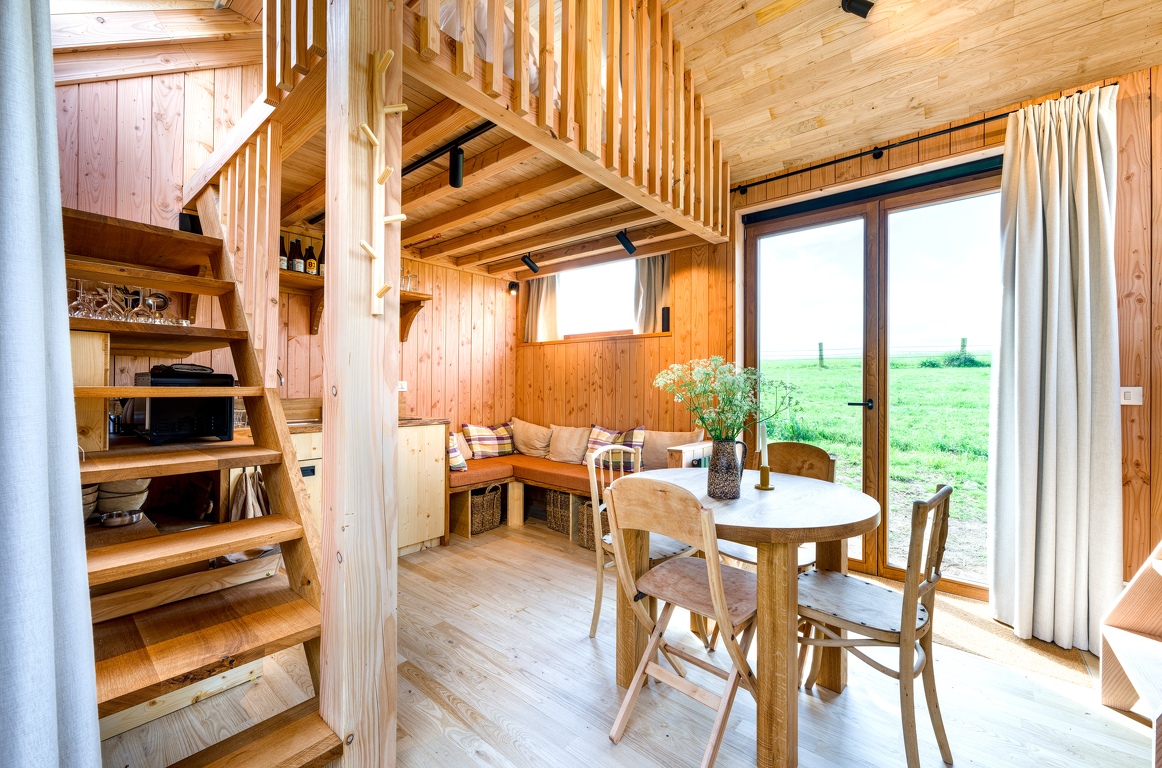
Our individual Cosy Cabins
Professional corporate retreat: definition and benefits
The corporate retreat is the most accessible and versatile format. One day, sometimes two, away from the office in a natural setting, to take a breath, reconnect and recharge together.
There is not necessarily a big programme or a tight agenda. The idea is to create breathing space for the team: informal discussions, gentle activities, a meal shared outdoors. Simple, but remarkably effective for restarting the dynamic of a group that is starting to run out of steam.
The corporate retreat suits teams under heavy pressure, after an intense project or at the start of the year, to lay the foundations of a new cycle in a healthy spirit. It is also one of the formats most recommended by experts in quality of working life (QWL) to prevent collective burnout.
Team offsite in a natural setting: organisation and good practice
The offsite is a working day held elsewhere, but not just anywhere. You leave the office to gain focus, creativity and collective efficiency. The agenda is more structured than for a corporate retreat: workshops, decision-making, brainstorming sessions.
The natural setting plays a key role here: it encourages lateral thinking, lowers inhibitions and creates a context that favours honest exchanges. Decisions made during a nature offsite are often better accepted and better remembered than those from a conventional meeting.
To make an offsite a success, a few good practices help: set clear objectives beforehand, alternate working time and free time, and choose a venue that allows both concentration and moving around outdoors.
Residential seminar in cabins: an overnight stay, the complete experience
The residential seminar is another dimension. When you stay overnight on site in a cabin, a guesthouse or an unusual form of accommodation, something changes in the group dynamic. Time stretches out. Conversations carry on around the fire after dinner. Bonds form differently, more deeply.
It is the ideal format for teams that need a genuine collective reset, or for turning points in an organisation’s life: launching a new project, merging teams, changing strategic direction. Gîtes de Wallonie also lists many accommodations suited to this type of professional stay in Belgium.
The overnight stay turns a seminar into a shared experience, and shared experiences are what truly bind a team together.
Strategic corporate retreat in nature: for executives and management committees
The strategic retreat is aimed at management committees and leadership teams. It is a premium format, often lasting two to three days, designed to take a step back, question fundamentals and build the organisation’s long-term vision.
Away from overloaded diaries and daily interruptions, leaders regain the capacity to think deeply. Nature plays a particular role here: it puts priorities back in their place and invites more essential, less reactive reflection.
A successful strategic retreat combines intense working sessions, moments of silence and walking, and informal spaces for discussion, all in a setting beautiful and calming enough to inspire.
Study day in the heart of nature: practical guide and typical schedule
The study day in nature is the most structured format of all. It follows a precise programme, with defined objectives, speakers, workshops and deliverables expected by the end of the day. The difference from a conventional meeting? The natural setting, which changes the group’s energy completely.
According to Visit Belgium, business tourism in the heart of nature is growing significantly in Belgium, driven in particular by companies’ demand for more engaging and memorable formats.
A typical schedule might look like this:
| Time | Content |
|---|---|
| 9:00 am | Welcome & coffee outdoors |
| 9:30 am | Opening & framing of the day |
| 10:00 am | Workshop 1: work in small groups |
| 11:30 am | Active break: walk or nature activity |
| 12:00 pm | Shared lunch outdoors |
| 1:30 pm | Workshop 2: plenary session or co-creation |
| 3:00 pm | Break & free time |
| 3:30 pm | Summary & decision-making |
| 5:00 pm | Closing & farewell drink |
This alternating rhythm of work, movement and conviviality is what makes the study day in nature so effective. Participants leave energised rather than exhausted.
Venue & unusual setting for your corporate seminar
The venue is often the first decision and one of the most important. It sets the tone for the whole day. A poor choice of venue can sink even the best programme. A venue that inspires, on the other hand, does half the work for you.
But how do you choose? Which criteria should you look at? And why does a private estate in the heart of nature really make a difference compared with a conventional conference hotel?
The essential criteria for a good nature seminar venue
Before booking, a few questions are worth asking. Is the venue reserved exclusively for your group, or do you share the space with other visitors? Is there enough outdoor space to move around, breathe and do outdoor activities? Is the setting genuinely natural (forest, meadow, countryside) or is it simply an urban garden?
Here are the essential criteria to check:
| Criterion | Why it matters |
|---|---|
| Exclusive use of the whole venue | Guarantees confidentiality and group cohesion |
| Generous outdoor spaces | Allows outdoor activities and restorative breaks |
| Authentic natural setting | Forest, meadow, water: elements that soothe and inspire |
| Suitable capacity | Neither too big nor too small: intimacy encourages exchange |
| Accessibility | Less than an hour from major cities to limit travel fatigue |
| On-site accommodation | Essential for residential formats |
| Eco-responsible commitment | Labels such as Green Key or equivalent |
| Local catering available | Seasonal produce, local artisans: in keeping with the spirit of the place |
Natural estate for seminars: why a private setting changes everything
There is a fundamental difference between hiring a room in a hotel, even a countryside one, and reserving an entire estate for your group alone. In the first case, you are one customer among many. In the second, the space is entirely yours for the day.
This exclusive use creates something precious: a feeling of a bubble, a parenthesis outside the world. Colleagues feel genuinely cut off from daily life. Nobody passes strangers in the corridors. Nobody is disturbed by the noise of another group. The team exists in its own bubble, and that is exactly what it needs to truly reconnect.
This is all the more true when the estate offers unusual features: treehouses, an outdoor pool, horses roaming free, a forest within easy reach. These details turn a seminar into a memory.
Organising an unusual seminar: why step outside conventional meeting rooms?
The conventional meeting room has one major flaw: it looks like a meeting room. And when the environment looks like everyday life, the brain stays in everyday mode. Creativity does not take off. Communication habits stay the same. The decisions made often lack the freshness you hoped for.
The unusual, on the other hand, unlocks something. When you find yourself somewhere you have never seen, in a setting that surprises and enchants, the brain breaks out of its automatic patterns. You observe, you marvel, you talk to each other differently. This is what business tourism specialists call the break effect, and it is remarkably effective at stimulating creativity and perspective.
An unusual form of accommodation, whether a cabin, a castle or a rural estate, is therefore not a gimmick. It is a tool in the service of collective performance.
Off-site meeting venues: the best alternatives in nature
In Belgium, there is no shortage of options for holding a seminar away from the office and close to nature. Here are a few ideas depending on the type of setting you are looking for:
Private rural estates are ideal for groups who want a complete experience, with accommodation, workspaces and activities on site. They offer the flexibility of a venue entirely dedicated to your group.
Abbeys and historic sites such as the Villers-la-Ville Abbey combine an exceptional setting with an atmosphere that encourages reflection. Perfect for strategic formats or memorable cohesion moments.
Nature centres and nature parks offer grand settings for outdoor activities and environment-focused team building. The Fédération des Parcs Naturels de Wallonie lists the spaces available to groups.
Guesthouses and unusual accommodation, such as cabins, yurts and tiny houses, are perfect for residential seminars that focus on experience and total disconnection.
In every case, the key remains the same: choose a venue that tells a story, that inspires, that makes you want to be there. Because a successful seminar always starts with a venue people look forward to.
Organising a nature seminar: complete guide, logistics and prices
Organising a nature seminar cannot be improvised. But it is not as complicated as you might think either. With a little method and the right questions asked early on, everything falls into place naturally. Here is a practical guide to take you from the initial idea to the big day.
Defining your objectives and budget
Before looking for a venue or choosing activities, the first question to ask is simple: why this seminar? What does the team really need right now?
Cohesion after a tense period, launching a new project, strategic decision-making, or simply a moment of collective breathing space: each objective calls for a different format. Taking the time to define it clearly means making sure the day will genuinely serve a purpose.
As for budget, nature seminars are often more affordable than you might imagine. In Belgium, you can generally expect to pay between 50 and 150 euros per person for a day without an overnight stay, depending on the venue, catering and chosen activities. For a residential seminar with an overnight stay, the budget naturally rises but remains competitive compared with urban conference hotels.
How do you organise a successful professional event?
A successful professional event rests on three pillars: clear objectives, the quality of the setting and the care given to transitions between moments. This last point is often neglected, yet it is what makes all the difference.
Alternating intense work with free time, planning informal moments around a meal or an activity, leaving room for the unexpected: these pauses are what allow the most valuable exchanges to happen. The best seminars are not those with the fullest agenda, but those where people felt they really had time to talk to each other.
For more on organisational good practice, the Wallonia Tourist Office offers useful resources for professional event organisers in the region.
Turnkey seminar in Belgium: everything you need to plan
Here are the elements to anticipate for a well-organised nature seminar:
The venue: book early enough, especially for spring and summer weekends. Private estates fill up fast between April and September.
Transport: arrange car-sharing or group transport from Brussels or the nearest city. It is also a chance to start building connections before you even arrive.
Catering: favour local catering, in keeping with the spirit of the place. Seasonal produce, regional artisans, meals shared outdoors when the weather allows.
The programme: strike a balance between working time, activities and free moments. Do not overload the agenda. Leave room for the unexpected.
Internal communication: announce the seminar early enough, explain the objectives and build enthusiasm. A seminar that is well sold internally generates engagement even before the big day.
The complete logistics checklist
So that nothing is forgotten, here is a practical checklist:
| Step | To do |
|---|---|
| 8 weeks before | Define the objectives, format and budget |
| 6 weeks before | Find and book the venue |
| 4 weeks before | Build the programme and confirm the catering |
| 2 weeks before | Send the practical information to participants |
| 1 week before | Confirm bookings and prepare materials |
| The day before | Check the logistics and prepare the spaces |
| On the day | Welcome everyone warmly and kick off the day with energy |
| Afterwards | Gather feedback and measure the impact |
Mistakes to avoid
Even with the best intentions, certain mistakes come up again and again when organising nature seminars.
Overloading the agenda is probably the most common mistake. You want to make the most of the day, so you add more workshops and presentations, and you end up recreating exactly the office atmosphere you wanted to escape. Less is often more.
Neglecting the weather is another classic error. In Belgium, having a plan B for outdoor activities is essential. A pleasant covered space can turn a rainy day into a cosy, memorable moment.
Forgetting informal moments: the best conversations at a seminar often happen over lunch or during a walk. These moments should not be sacrificed to an overly tight programme.
Choosing a venue that is too big for the group: a team of 10 people in a space designed for 100 creates a cold, impersonal atmosphere. The venue should be the right scale to foster intimacy and warmth.
Team building & nature activities for your teams
Team building in nature is much more than a day of games in the woods. It is a moment designed to build bonds, step out of the comfort zone and go back to the office with something extra. Something invisible but real: a better understanding of one another, stronger trust, a renewed collective energy.
Nature is the ideal playground for this. It puts everyone on an equal footing, it surprises, it invites cooperation. And above all, it stays in people’s memories far longer than a workshop in a meeting room.
10 nature team building ideas to strengthen team cohesion
You do not need a complicated programme or an excessive budget to create a standout moment. Here are ten concrete ideas, adaptable to the size of the group and the goals of the day:
Guided forest hike
Walk together, observe nature, learn to slow down. Simple and deeply restorative.
Discovering edible plants
A nature guide takes the group to discover the hidden treasures of the forest. Fun and unifying.
Activities with horses
The relationship with the animal reveals unexpected group dynamics. Powerful for teams going through change.
Team building projects
A hut, a raft, a natural shelter. A collaborative challenge that tests communication and collective creativity.
Outdoor cooking workshop
Preparing and sharing a meal together creates a bond in a way everyone understands.
Orienteering or nature rally
A team orienteering course to encourage cooperation and resourcefulness.
Outdoor yoga or meditation
For teams who need to refocus and catch their breath before heading back.
Mountain biking or off-road scooters
A shared dose of adrenaline to create strong collective memories.
Board game evening
After a day outdoors, finish around board games in a warm atmosphere.
Golf taster or outdoor sport
Try something new together, on an equal footing, to break down silos.
Nature team building in Wallonia & Belgium: ideas and unusual venues
Wallonia offers exceptional terrain for team building in nature. With dense forests, green valleys and unspoilt rural estates, the possibilities are many and varied.
In Walloon Brabant, just a few kilometres from Brussels, you will find private estates nestled at the edge of the forest, ideal for combining work and outdoor activities. Further south, the Ardennes offer grand landscapes for more sporty, adventurous team building.
To explore the options available in Wallonia, Visit Wallonie and Visit Brabant Wallon offer selections of venues and providers specialising in professional events in nature.
Eco-responsible team building: how to organise a cohesion day with purpose
More and more companies want to align their internal events with their CSR commitments. Eco-responsible team building meets exactly this expectation: it builds bonds while raising teams’ awareness of environmental issues.
In practice, this can take several forms. Organise a tree-planting day or restore a nature trail. Choose a venue certified Green Key or committed to sustainable tourism. Favour local, seasonal catering with no plastic and no food waste. Offset travel emissions through a contribution to a local reforestation project.
These choices send a strong message to your colleagues: your company acts in line with its values. And in terms of employer brand, that is a weighty argument.
Activities for a corporate seminar: what to do as a group in the heart of nature?
The choice of activities depends first and foremost on the goals of the day and the profile of the group. Here are a few pointers to guide your choice:
| Goal | Recommended activities |
|---|---|
| Strengthen cohesion | Guided hike, cooking workshop, team building projects |
| Stimulate creativity | Edible plant discovery, orienteering, outdoor artistic activities |
| Reduce stress | Outdoor yoga, nature meditation, forest walk |
| Create shared adrenaline | Mountain biking, off-road scooters, golf taster |
| Engage with CSR values | Tree planting, guided nature day, visit to an eco-responsible site |
| Finish on a friendly note | Board game evening, wine tasting, shared meal outdoors |
The ideal is often to combine two or three activities in the day, alternating effort and relaxation, seriousness and lightness. It is this varied rhythm that makes a team building day truly memorable.
Seminars for every team profile: SMEs, executive committees, creative teams, cross-team groups
There is no single type of team, and therefore no single type of nature seminar. What works for an executive committee does not necessarily suit the needs of a creative team or a cross-department group. Knowing your team profile is the key to choosing the right format, the right pace and the right activities.
Here are a few pointers for the most common profiles.
Seminar for SMEs & scale-ups: organising a human-scale cohesion day
In an SME or a scale-up, teams are often close-knit by nature. But rapid growth sometimes creates friction: new hires to integrate, different cultures to harmonise, a shared vision to consolidate.
A nature seminar is the ideal tool for getting through these transition periods. In an intimate, welcoming setting, far from the office and the bustle of daily life, teams rediscover what unites them. Newcomers settle in faster. Longer-serving colleagues rediscover the pleasure of working together.
For SMEs, the advantage of a nature seminar is also flexibility: no heavy infrastructure, no oversized conference room. A human-scale private estate, a well-designed programme and good food are enough to create a strong, memorable moment.
According to the Federation of Enterprises in Belgium, SMEs make up more than 99% of the Belgian business landscape. In other words, the human-scale seminar is the format that suits the vast majority of the country’s companies.
Seminar for executive committees: retreat and strategic vision in nature
An executive committee has specific needs. The pressure of daily business, the decisions to be made, the long-term strategic stakes: committee members rarely have the time and space to think truly deeply.
This is precisely what a strategic retreat in nature offers them. Two or three days away from the office, in a calming and inspiring setting, to gain perspective, question the fundamentals and build the vision for the coming years together.
Nature plays a special role here. It puts priorities back in their proper place. It invites more essential, less reactive thinking. Decisions made in this context are often better aligned, more lasting and better accepted across the whole organisation.
For this type of format, exclusive use of the whole venue is essential. Confidential discussions and quality of presence are the two non-negotiable conditions of a successful executive retreat.
Cross-team & interdepartmental seminar: aligning teams in a natural setting
Cross-team seminars are often the most complex to organise, and yet the most necessary. When teams that rarely work together have to collaborate, misunderstandings pile up quickly. A nature seminar is the chance to reset everything, in a neutral and relaxed context.
Away from the usual territories and the power dynamics of the office, teams discover each other in a different light. Prejudices fall away. Silos begin to crack. And a shared culture starts to take shape, built on an experience shared in nature.
For this type of seminar, collaborative activities are particularly effective: team building projects, nature rally, shared cooking workshop. Challenges that require people to cooperate, communicate and trust one another, whatever team they come from.
Nature seminar near Brussels and in Walloon Brabant
People often imagine that you have to go far to find real nature. Cross the Ardennes, head to the mountains, travel for hours. In reality, less than an hour from Brussels, there are landscapes of rare beauty, unspoilt estates and natural settings that make you forget the city within minutes.
Walloon Brabant is one of those surprising regions. With ancient forests, rolling meadows and villages of preserved charm, it is perfectly suited to organising nature seminars for companies from Brussels and Wallonia.
Seminar near Brussels: the best nature venues within an hour
For teams based in Brussels, proximity is often a deciding factor. Spending two hours in transit for a one-day seminar means wasting energy before you have even begun.
The good news is that Walloon Brabant offers exceptional natural settings just 30 to 45 minutes from the capital. The E411 and N25 make it easy to reach Villers-la-Ville, Chastre or the Wavre area without major traffic problems.
For groups who want to travel by train, the Brussels-Namur line serves several stations near the region’s main estates. SNCB offers attractive group fares for business travel, which makes it an interesting option for teams mindful of their carbon footprint.
Seminar in the countryside near Wavre and Villers-la-Ville: the local guide
Wavre and its surroundings are an ideal starting point for exploring nature seminar possibilities in Walloon Brabant. The region combines accessibility, beautiful landscapes and a rich natural and cultural heritage.
A few kilometres from Wavre, Villers-la-Ville is a village of authentic charm, best known for the famous ruins of Villers Abbey, one of the most impressive medieval sites in Belgium. This exceptional historic and natural setting makes it a particularly inspiring area for teams seeking renewal and a break from their routine.
The municipality of Villers-la-Ville is committed to enhancing its natural and rural heritage, which attracts a growing number of companies looking for authentic settings for their professional events.
Nature seminar in Walloon Brabant: the ideal setting for your teams
Walloon Brabant has everything needed to host quality nature seminars. Unspoilt, accessible nature, a fast-growing range of unusual accommodation, committed local gastronomy and a variety of activity providers.
It is also a region that takes its eco-responsible commitment seriously. Many tourism businesses there are certified Green Key or involved in sustainable tourism initiatives recognised by Visit Brabant Wallon.
For companies from Brussels and Wallonia looking to organise a nature seminar in Walloon Brabant without sacrificing proximity or the quality of the setting, Walloon Brabant is the natural reference destination.
Le Domaine des Trois Tilleuls: your nature seminar in Walloon Brabant
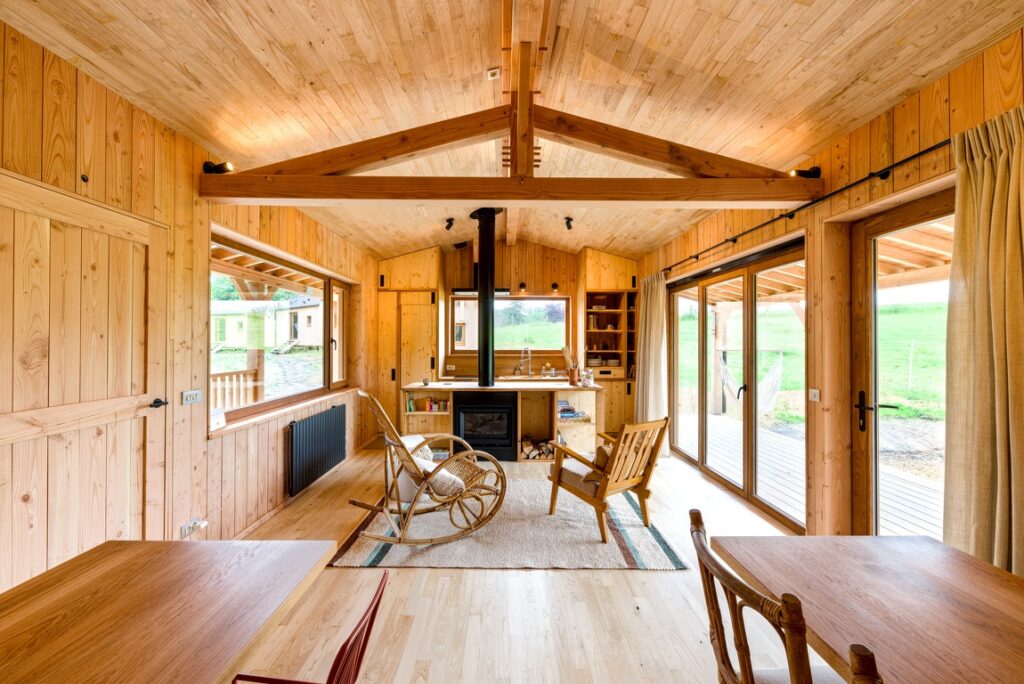
Le Domaine des Trois Tilleuls, a private, eco-responsible setting for your nature seminars in Villers-la-Ville.
In Villers-la-Ville, at the edge of the forest and 40 minutes from Brussels, Le Domaine des Trois Tilleuls offers a private, eco-responsible setting to welcome your teams in an exceptional natural environment.
Nestled in the heart of Walloon Brabant, the estate offers several hectares of meadow, an ancient forest, horses roaming free, an outdoor pool (in season) and a Finnish sauna. A place that makes you forget daily life within minutes, and creates the ideal conditions for your teams to truly reconnect.
What the estate offers
Le Domaine des Trois Tilleuls welcomes up to 16 people for seminars, in a setting entirely reserved for your group. No other guests, no interruptions. Just your team, nature and time to reconnect.
| What you get | The details |
|---|---|
| Exclusive use of the whole estate | The estate is reserved exclusively for your group |
| Unusual accommodation | 4 Cosy Cabins and 1 Castle Guesthouse |
| Capacity | Up to 16 people |
| Rate | €550 per day + €20 per person |
| Local catering | Available as an option, seasonal produce |
| Green Key label | International eco-responsible certification |
| Accessibility | 40 minutes from Brussels |
A recognised eco-responsible commitment
Le Domaine des Trois Tilleuls has held the Green Key label since 2025, the leading international certification for sustainable tourism. Holding your seminar here also means aligning your event with your CSR and ESG commitments.
Want to find out more?
Discover our full nature seminar offer, the available formats, the activities and the detailed rates below.
We guarantee a reply within 48 hours.
FAQ: nature seminars & team building in Belgium
What is a nature seminar?
A nature seminar is a professional event held in a natural setting, far from offices and standard meeting rooms. Forest, countryside, rural estate: the environment becomes a player in its own right. It can take several forms: study day, team offsite, corporate retreat, residential seminar or strategic retreat.
What are the benefits of a seminar in the heart of nature?
The benefits are many and well documented: reduced stress, stimulated creativity, stronger team cohesion and better internal communication. Nature creates a context that encourages honest exchanges and decisions made with more clarity and perspective.
How much does a nature seminar cost in Belgium?
Prices vary according to the venue, the format and the activities chosen. As a general rule, allow between €50 and €150 per person for a day without an overnight stay. For a residential seminar with accommodation, the budget logically rises but remains competitive compared with urban conference hotels. At Le Domaine des Trois Tilleuls, the package is offered at €550 per day + €20 per person.
What is the difference between a corporate retreat and an offsite?
A corporate retreat is a more flexible format, focused on relaxation and the team reconnecting, with little or no structured agenda. An offsite is a working day held away from the office, with defined objectives, workshops and expected deliverables. Both take place outside the office, but the intention and the pace are different.
How many people can be hosted for a nature seminar?
It depends on the venue chosen. Private estates such as Le Domaine des Trois Tilleuls generally welcome groups of 8 to 16 people, which guarantees an intimate and effective atmosphere. For larger groups, other types of venue exist, but the experience will necessarily be less personalised.
How do I choose the right seminar format for my team?
Start by defining the main goal of the day. Does your team need to unwind and reconnect? Opt for a corporate retreat. Do you have important decisions to make? A structured offsite will be more suitable. Do you want to create a memorable experience over several days? The residential seminar is made for you.
Do I need a private venue to organise a nature seminar?
It is not compulsory, but it is strongly recommended. A private venue guarantees confidential discussions, group cohesion and the atmosphere of a bubble cut off from the world. That is what turns an ordinary seminar into a truly memorable experience.
Where can I hold a nature seminar near Brussels?
Walloon Brabant is the ideal destination for companies from Brussels. Just 30 minutes from the capital, you will find private estates in the heart of nature, unspoilt landscapes and authentic settings that make you forget the city within minutes. Le Domaine des Trois Tilleuls, in Villers-la-Ville, is one of these addresses. Discover our offer on our seminar page